Lutein, Zeaxanthin And AREDS2: What The Landmark NIH Study Found
The Age-Related Eye Disease Study 2 (AREDS2), sponsored by the National Eye Institute, is the single most important piece of research behind the eye-supplement category.
Understanding exactly what it found, and who it applies to, helps you evaluate marketing claims that reference it.
What AREDS2 actually tested
AREDS2 was a large, multi-year clinical trial that tested whether a specific nutrient combination — including lutein, zeaxanthin, vitamin C, vitamin E and zinc — could slow the progression of age-related macular degeneration (AMD) in people who already had intermediate or advanced AMD in at least one eye. Background is documented by the National Eye Institute.
What it found
Who this finding actually applies to
This is the detail most marketing skips: AREDS2 studied people who already had existing AMD, not healthy adults hoping to prevent eye problems from ever developing. The trial does not directly demonstrate that the same nutrients prevent AMD in someone with no existing disease, though the underlying antioxidant and macular-pigment mechanisms are reasonably thought to be relevant more broadly.
What AREDS2 does not show
AREDS2 did not test whether this nutrient combination improves general eye comfort, reduces digital eye strain, or benefits people without diagnosed AMD. It also does not support claims that this combination reverses vision loss that has already occurred — it slows progression, it does not restore lost function.
Applying this to TheyaVue
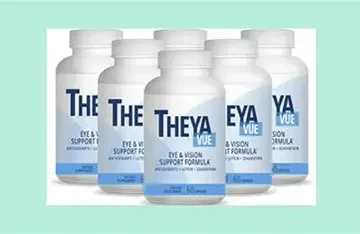
TheyaVue's core five ingredients — Lutein, Zeaxanthin, Vitamin C, Vitamin E and Zinc — mirror the AREDS2 combination. See our full breakdown on TheyaVue's ingredients. This gives that core a genuinely strong evidence foundation, though it's worth remembering AREDS2 studied people with existing AMD specifically, and the finished TheyaVue product has not been separately clinically tested.