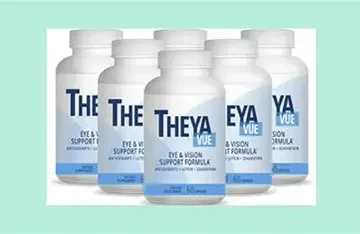
What The Herbal Additions In Eye Supplements Really Do
Beyond the well-researched AREDS2 core, most eye supplements, TheyaVue included, add a handful of traditional herbal ingredients with a considerably thinner evidence base.
Understanding what these additions can and cannot honestly claim helps you weigh whether they justify a premium price.
Bilberry: a famous story, a mixed record
Bilberry's reputation for night vision traces back to an often-repeated (and not well-documented) story about WWII pilots. Modern clinical trials on bilberry for night vision and eye fatigue have produced genuinely mixed results, with several well-designed studies finding no significant benefit over placebo.
Rutin: plausible mechanism, thin human data
Rutin is associated with capillary strength in general cardiovascular research, and the theory extends this to eye capillaries. However, human research specifically testing rutin for eye-related outcomes is limited, making this one of the weaker-evidence ingredients in most formulas that include it.
Quercetin: a genuine antioxidant, less eye-specific data
Quercetin has a reasonably solid general antioxidant and anti-inflammatory research base. What's thinner is research connecting quercetin specifically to eye health outcomes, as opposed to general antioxidant activity.
Grape Seed Extract: strong general antioxidant, limited vision research
Grape seed extract's OPC antioxidants are well studied generally, with reasonable evidence for tissue protection. Direct human research on vision-specific outcomes remains limited, mostly extrapolated from its general antioxidant profile.
Why formulas include them anyway
Applying this to TheyaVue
TheyaVue includes all four of these ingredients alongside its AREDS2-aligned core. See our full ingredient breakdown for the complete evidence grading. We think it's more useful to tell you honestly which ingredients carry weaker evidence than to present the whole formula as uniformly proven.